
A journey of a thousand miles begins with a single step.
Lao Tzu, Tao Te Ching
Over my many years as a physics student, the one thing I have discovered is that if you want to understand something, you need to be proactive. No matter how simple or difficult an idea may be, the only barrier to knowledge is if you are willing to spend time trying to learn.
However, that doesn’t mean you can’t have a little help along the way.
On the start of this great adventure, I believe it’s important to lay out some founding principles I want this blog to measure itself against; this should give you an idea as to what the blog will be about, whilst also giving me some guiding concepts that will make sure any future blog posts will be up to scratch.
Each blog post should give you a question and an answer
Doubts are good. Confusion is excellent. Questions are awesome.
Manoj Arora, Dream On
I want each post to be (somewhat) self-contained; you should be able to visit the blog, gain an understanding of the problem or concept we’ll be trying to understand, and leave with either the question answered or a solid grounding in whatever concept I’ve tried to explain. Although I do have some ideas for larger projects I want to tackle down the line, I’m hoping each blog post will maintain this level of digestibility. Although we may grow and expand upon some earlier concepts, you shouldn’t have to spend an hour trawling through dozens of pages to be able to read my latest post.
Let you understand the maths
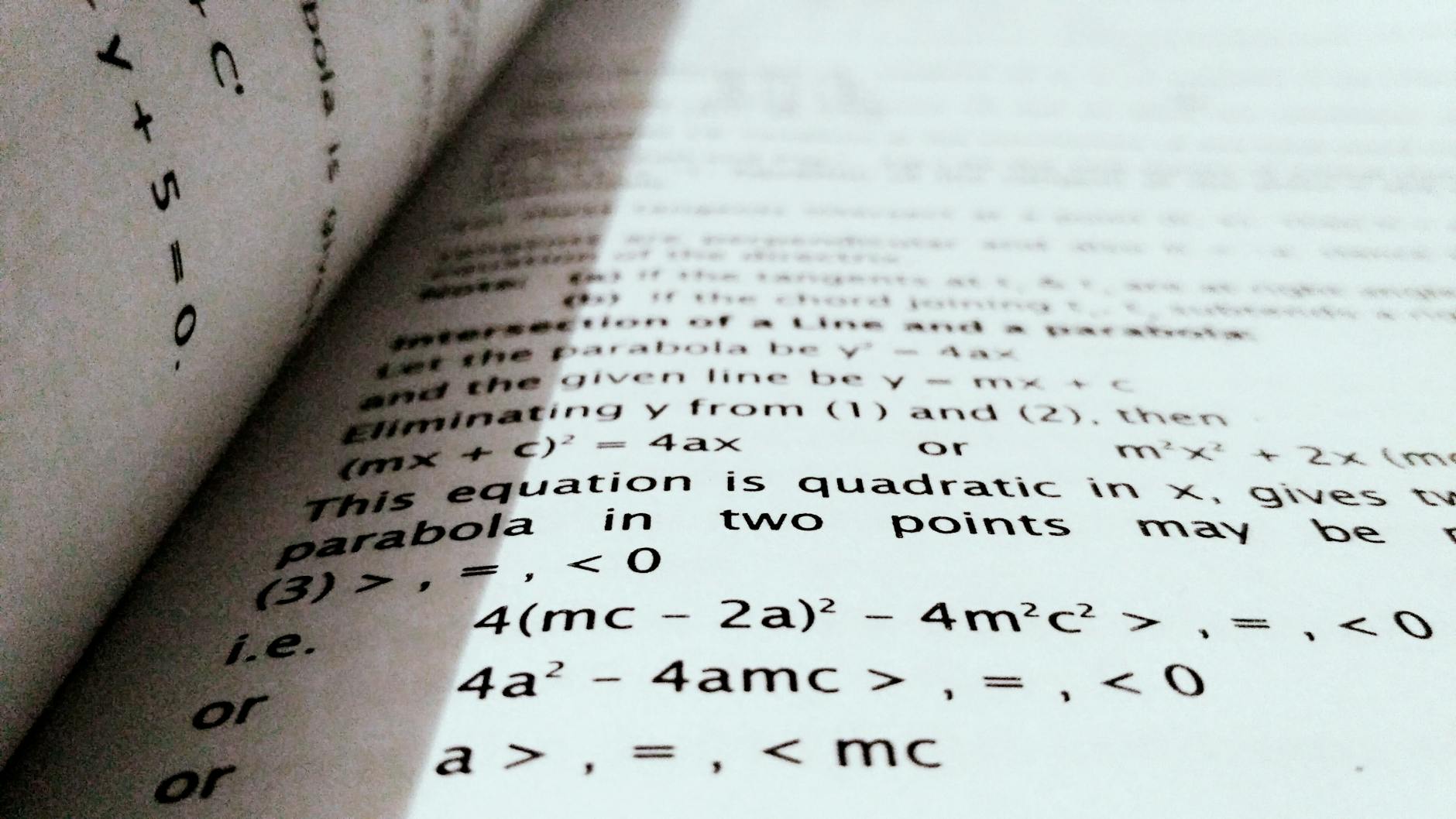
If there’s one thing I’ve noticed about physics education, particularly that aimed at pre-university students or those who have no formal physics education, is that they often completely shy away from the maths. Often this has the benefit of allowing students to quickly and easily get a surface level understanding of a problem and its solution without having to put in much effort. The disadvantage of this approach is that students cannot gain a deeper understanding of the concepts without exploring the mathematics, and some of the beauty of physics is lost by ripping the mathematics out.
To maintain this accessibility, any maths needed will be explained inside of the blog post*; you shouldn’t have to google new concepts at all in order to read my blog. Of course, this comes with it’s own set of problems: mainly, concepts will require a larger time commitment on behalf of the reader. However, I hope this trade off will lead to a much deeper understanding of the physics involved and will stick with the reader.
* To a certain degree. Don’t expect me to explain addition and subtraction on my way to talk about Fourier transforms.
Enjoy yourself
People rarely succeed unless they have fun in what they are doing.
Dale Carnegie
Physics is fun: it should be enjoyable to study, and difficulty is no excuse for boring explanations. I want to avoid dry blocks of text that lose readers interests, and I believe the best way to do that is to ensure the reader is constantly engaged in the writing. At no point should you have the urge to skip passages because you either aren’t interested in what I’m saying, or don’t understand and have lost track of what’s going on.
The way to accomplish this is to ensure you understand why I’ve made certain choices from one step of a derivation to another, and to explain how the maths I’m talking about relates to something in tangible (we are physicists after all).
Show the beauty of physics
This blog is called “The Art of Physics” after all. However, you may be wondering what I mean when I say beauty; physics is about objective physical and mathematical truths, and what could be more subjective than beauty? Well to me, the beauty of physics lies in its symmetries (in fact, large parts of physics are based solely around trying to root out conservation laws by looking for symmetries).

Wherever possible, I will try to point out what and where these symmetries are: what can we change about a system without altering its physics? If we derive an equation for one particular system, what other systems does it apply to? How can we simplify our equations based on the symmetries of our system? As I answer these questions in coming blog posts, hopefully the beauty I’m talking about should begin to become obvious.
Well, if you’ve made it this far, then it hopefully means you’re interested in learning more about physics. Great. I hope to upload a new post at a minimum of once a month, and hopefully at least once every two weeks depending on my university schedule and how difficult the post I’m working on is. If there are any particular topics you want me to explore then please let me know; if there’s even one person who wants help understanding an idea, that seems like a good enough reason to cover it.
Hope to see you again soon
– Matthew
 The Art of Physics